
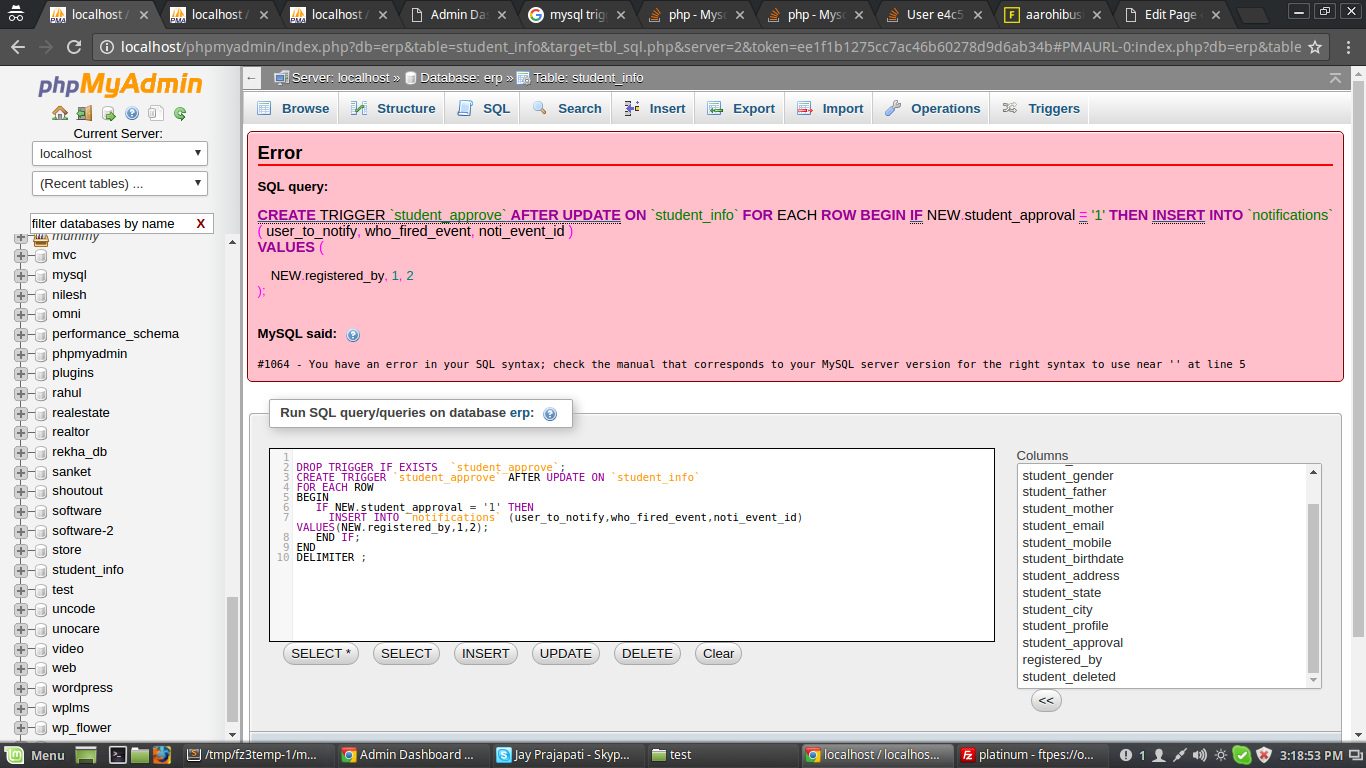
En el mundo de las bases de datos, los disparadores (o triggers) son herramientas muy útiles y poderosas para automatizar ciertas tareas en response a cambios específicos en los datos. En particular, los triggers del tipo "FOR EACH STATEMENT" de MySQL ofrecen una funcionalidad avanzada que permite ejecutar una acción una vez para cada conjunto de filas afectadas por una operación DML (Data Manipulation Language). En esta artículo, exploraremos en detalle las posibilidades que ofrece esta funcionalidad avanzada y cómo puedes aprovecharla en tus bases de datos MySQL.
Understanding MySQL Triggers: Identifying the Trigger for Each Statement
MySQL triggers are powerful tools that can automate various tasks within a database. They are event-driven and execute a set of actions when a specified event occurs. However, it's important to identify the trigger for each statement to avoid confusion and ensure efficient performance.
One way to identify the trigger for a statement is by looking at the trigger name. Each trigger has a unique name that identifies it within the database. Another way is to analyze the code within the trigger and determine what action it performs in response to the event.
A common mistake is to assume that all statements within a trigger are executed by the same trigger. In reality, each statement can have its own trigger, and it's essential to identify which trigger is responsible for each action.
By properly identifying triggers for each statement, developers can ensure that their code is organized and easy to maintain. It also helps to prevent errors and improve database performance by reducing unnecessary trigger execution.
Overall, identifying the trigger for each statement is an important aspect of working with MySQL triggers. It requires attention to detail and careful analysis of code, but the benefits are worth the effort.
Reflecting on the topic of MySQL triggers, it's evident that they are an essential part of database management. As databases become more complex, harnessing the power of triggers is critical for efficient and automated data handling. With careful attention to trigger identification, developers can make the most of this valuable tool.
Exploring the Various Types of Triggers in MySQL and How They Work
MySQL is a powerful relational database system that provides support for triggers. Triggers are specific actions that are automatically performed by the server in response to certain events or conditions.
There are different types of triggers that can be used in MySQL, including BEFORE triggers, AFTER triggers, and INSTEAD OF triggers. Each type of trigger has its own specific characteristics and use cases.
A BEFORE trigger is executed before the statement that causes it to fire is executed. This type of trigger is often used to check for certain conditions before making changes to the database, such as checking if a user has sufficient permissions to perform the action.
On the other hand, an AFTER trigger is executed after the statement that causes it to fire is executed. This type of trigger is often used to perform additional operations, such as auditing or logging actions.
An INSTEAD OF trigger is executed instead of the statement that causes it to fire. This type of trigger is often used for views or tables that have merge operations, where the trigger can substitute the original statement with a different one.
Triggers can also be defined to execute for specific events, such as INSERT, UPDATE, or DELETE. For example, a trigger can be created to update a secondary table when a record is inserted into the primary table.
Overall, triggers provide a powerful mechanism for automating actions in MySQL. However, it is important to use them judiciously and avoid creating complex or poorly-designed triggers that can slow down database performance.
In conclusion, understanding the different types of triggers in MySQL and how they work can help developers make better use of this powerful database system. By carefully designing and implementing triggers that address specific requirements, developers can improve the efficiency, security, and maintainability of their MySQL databases.
What are your thoughts on triggers in MySQL? Have you used them in your projects? Share your experiences and insights in the comments below!
Executing Triggers with Precision: How to Trigger Actions only when Specific Columns are Updated in MySQL
Los triggers en MySQL son una herramienta útil para automatizar acciones en la base de datos cuando se produce un cambio en alguna de las tablas. Sin embargo, a veces es necesario ejecutar acciones solo cuando una columna específica se actualiza.
En tales casos, es posible utilizar la sintaxis adecuada para filtrar los cambios y enfocarse solo en las columnas que interesan. Por ejemplo, para crear un trigger que se active solo cuando se actualiza la columna "precio" en una tabla de productos, se puede utilizar el siguiente código:
CREATE TRIGGER nombre_trigger
AFTER UPDATE ON nombre_tabla
FOR EACH ROW
BEGIN
IF NEW.precio != OLD.precio THEN
-- Aquí se pueden incluir las acciones a ejecutar
END IF;
END;
El IF en este caso comprueba si la nueva versión de la fila (representada por NEW) tiene un valor diferente en la columna "precio" que la versión anterior (representada por OLD). Solo si hay una diferencia, se ejecutarán las acciones incluidas entre las etiquetas BEGIN y END.
Con este tipo de técnica, se puede lograr mayor precisión en la activación de triggers y evitar ejecuciones innecesarias que pueden disminuir el rendimiento de la base de datos.
En conclusión, saber cómo utilizar triggers en MySQL de forma eficiente permite automatizar procesos y ahorrar tiempo, pero es importante conocer las opciones para filtrar y enfocar las acciones solo en los cambios específicos que interesan.
Ahora que sabes cómo ejecutar triggers en MySQL de manera precisa, ¿en qué situaciones podrías aplicar esto en tu trabajo o proyectos personales?
Ha sido un placer compartir contigo este artículo acerca de la funcionalidad avanzada de los Triggers en MySQL. Esperamos que la información proporcionada haya sido de gran utilidad para ti.
Si tienes dudas o comentarios adicionales, no dudes en contactarnos. ¡Hasta la próxima!
Si quieres conocer otros artículos parecidos a MySQL Trigger - For Each Statement Advanced Functionality puedes visitar la categoría Informática.

Aprende mas sobre MySQL